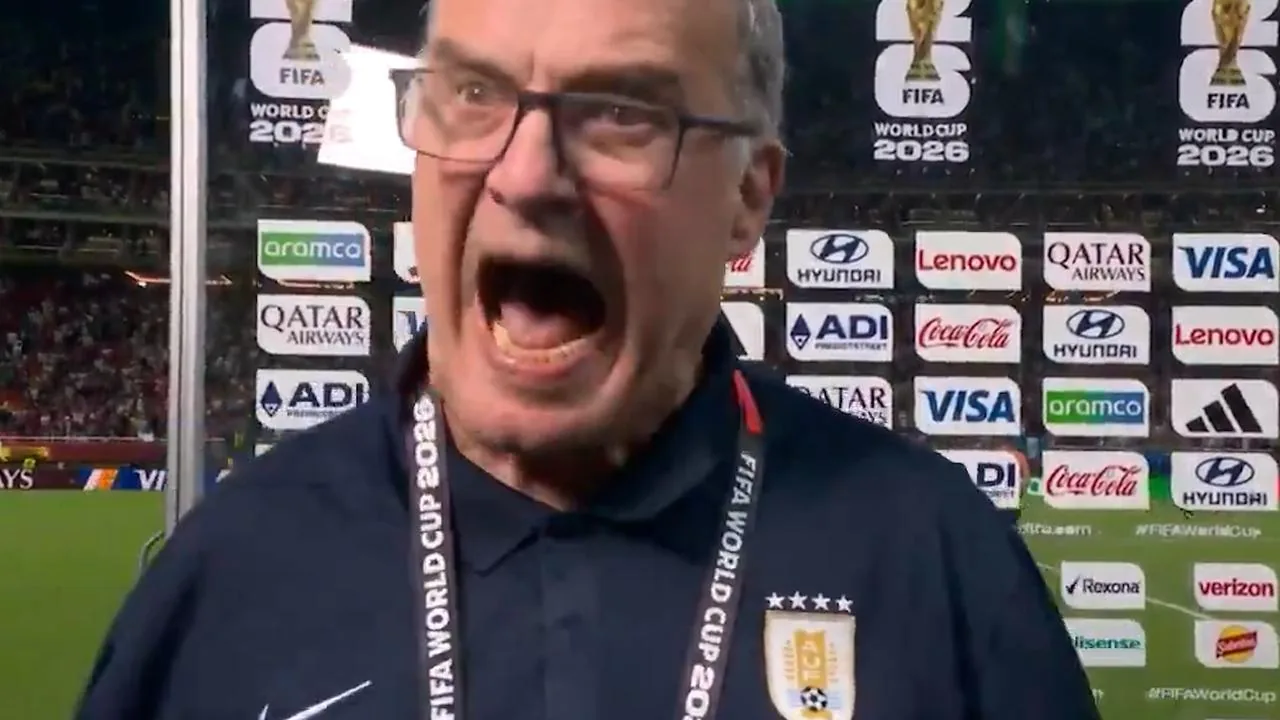

Uruguay has exited the World Cup at the group stage for the second consecutive tournament. This campaign concluded with a sense of disappointment and internal strife, marked by individual errors and tension between the coach and players. The team’s performance against Saudi Arabia in the second half offered a glimpse of their potential, but the overall tournament was marred by discord.
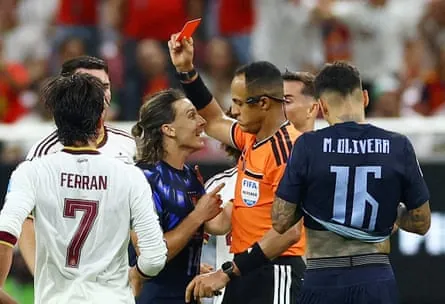
The final match saw Agustín Canobbio receive a red card for a foul, following altercations with the referee. This incident occurred shortly before Fernando Muslera conceded a goal, an image that has come to define Uruguay‘s tournament. The team’s departure follows disappointing draws against Cape Verde and Saudi Arabia.
Bielsa’s tenure ends
Marcelo Bielsa, the Uruguay manager, is departing his role amidst significant acrimony and disappointment. At 70 years old, this World Cup campaign is likely his last at this level. His previous World Cup experience with Argentina in 2002 also ended in a group stage exit. Despite his influence as a coach over several decades, this tournament has been described as dreadful for both him and Uruguay.
Bielsa accepted responsibility for the team’s performance, stating, “I’m the person responsible and I have to accept it.” He also commented on the team’s inability to convert chances and the nature of the goals conceded, describing them as “avoidable goals.”
Muslera’s performance was a point of contention. He was at fault for goals conceded against Cape Verde and Saudi Arabia. Bielsa’s decision to reinstate Muslera, who had been replaced by Sergio Rochet before the 2022 World Cup, has been described as a significant error. Rochet had maintained clean sheets in his three matches before being dropped.
Muslera was substituted at half-time during the final match, and Sergio Rochet came on as his replacement. Bielsa defended his decision to keep faith with Muslera, citing the goalkeeper’s past achievements and strong personality, despite acknowledging the criticism of his recent performance.
Internal team issues
Reports indicate significant unrest within the Uruguayan camp. Before a recent game, four senior players—Rochet, Manuel Ugarte, Rodrigo Bentancur, and Federico Valverde—reportedly sought a meeting with Bielsa. They expressed concerns about the intensity of training, which they claimed led to injuries, and suggested a change in tactical approach, advocating for a low block and counter-attacking strategy against Spain.
Bielsa, whose philosophy is antithetical to such an approach, rejected their request. He subsequently called a team meeting, addressing the players for 48 minutes. During this meeting, he outlined his intention to mirror Spain‘s tactics and explained his decision to include injured but loyal players in the squad.
Bielsa also accused the squad of attempting to remove him following Luis Suárez‘s retirement and subsequent criticism almost two years prior. Another instance cited was the exclusion of Nahitan Nández, who plays for Al-Qadsiah in the Saudi Pro League, from the World Cup squad. Suárez‘s departure occurred after the Copa América in 2024, suggesting a strained relationship with Bielsa.
During the team meeting, several players reportedly walked out after 40 minutes of Bielsa’s address, despite efforts by defender José María Giménez to persuade them to stay. Ronald Araújo, a defender who did not participate in the first two matches, reportedly commented on the mood, stating, “God willing we advance from the group, but this can’t be endured any longer.”
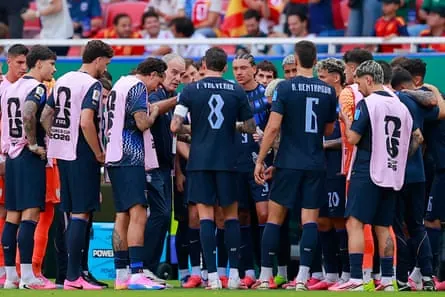
Bielsa controversially substituted Real Madrid‘s Federico Valverde during the final match, replacing him with Federico Vinas to introduce a more physical presence in the attack.
The team’s overall performance in the tournament saw them concede four goals, all of which stemmed from basic individual errors. These included Muslera spilling a header against Saudi Arabia, a defensive wall parting for a long-range free-kick that allowed Cape Verde to score, and a misplaced pass while Muslera was positioned outside his box, leading to an equalizer.
Bielsa’s legacy in tactical history is noted, but for Uruguay, this tournament has been a significant disappointment.
The Uruguayan squad’s current composition is also a factor, with a perceived decline compared to previous generations, lacking players like Luis Suárez, Diego Forlán, and Edinson Cavani. Notably, none of the players from the team that won the Under-20 World Cup three years ago have progressed to the senior national team.
Bielsa’s record at World Cups includes a group stage exit with Argentina in 2002 and a last-16 exit with Chile in 2010. His Uruguay team failed to secure victories against Saudi Arabia or Cape Verde.
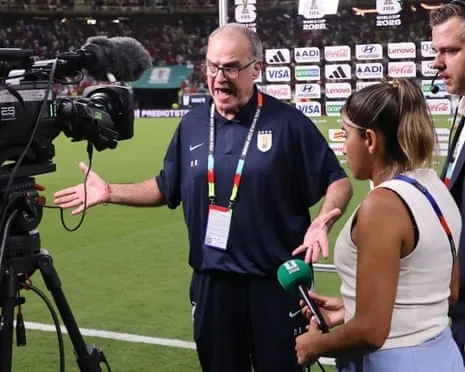
Following the team’s exit, Bielsa was observed shouting at a reporter, saying “get on with it” after a pause during an interview.
The United States Men’s National Team coach, Mauricio Pochettino, also expressed frustration with the media after a loss to Turkiye, despite his team winning their group. He questioned reporters for not congratulating the team on their group victory, stating, “Sorry guys, we won.” Pochettino had made nine changes to the starting lineup for the match against Turkiye, including starting mostly reserves.
Meanwhile, Graham Arnold‘s future as coach of Iraq is uncertain after their World Cup campaign concluded with a 5-0 loss to Senegal. Arnold cited a “stupid red card” and individual errors as contributing factors to their elimination. His contract expires at the end of the tournament.
In other news, Panama coach Thomas Christiansen welcomed a training ground confrontation between Cecilio Waterman and Jose Luis Rodriguez, viewing it as a sign of intensity ahead of their match against England.
Christian Pulisic, a star for the USMNT, returned to action after being sidelined with a calf injury sustained against Paraguay.
Read Also
Source: theguardian.com

George Hartwell is the Senior Football Correspondent at News-GB.org, covering the Premier League, the EFL and the England national side with twelve years of reporting experience. He reported on West Country football before national coverage. He holds a degree in Sports Journalism from the University of the West of England and completed an NCTJ diploma. Based in Bristol, he watches grassroots football and writes a tactics column. “Tactics tell you more than any scoreline.”