

England’s World Cup challenge at altitude
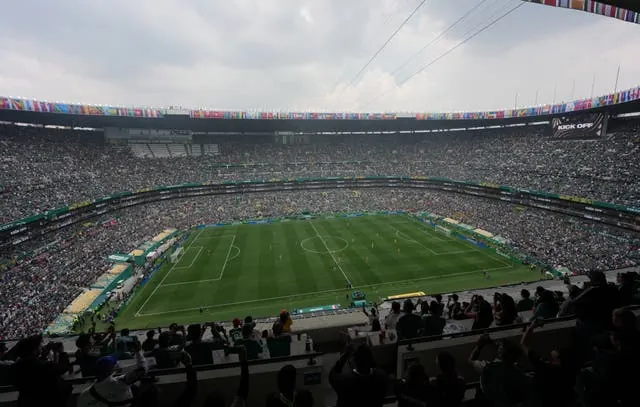
England are preparing for a significant challenge in their World Cup last-16 match against Mexico at the Azteca Stadium. The iconic venue in Mexico City is situated 7,220ft (2,240m) above sea level, presenting conditions that could impact player performance due to thinner air and reduced oxygen.
England manager Thomas Tuchel acknowledged the disadvantage, stating that adapting to the altitude in four days is impossible. He noted that the conditions would be a major factor, giving Mexico a considerable advantage. Despite this, Tuchel expressed confidence in his team’s readiness to manage the situation.
The scientific explanation for the impact of altitude involves a drop in the partial pressure of oxygen, meaning fewer oxygen molecules are available. This forces players to breathe more heavily to increase oxygen uptake, but ultimately, less oxygen reaches their muscles, potentially impeding physical performance. Murdoch University’s Brendan Scott detailed this effect, explaining that recovery runs become more difficult.
Mexico’s competitive record at the Azteca is notable, with 89 games played, 70 wins, 17 draws, and only two defeats. They also have an unbeaten record in 10 World Cup games at the stadium. The co-hosts have played most of their four games in the tournament at the Azteca and conducted a pre-tournament camp in their home country, which could aid their acclimatisation.
Historically, teams have approached altitude differently. In 1986, Sir Bobby Robson took the England squad to Mexico a year in advance to experience the conditions. However, for the current tournament, England‘s draw was only determined in December, limiting preparation time. The team plans to travel on Friday afternoon, arriving more than 48 hours before kick-off, following a final training session in Kansas City.
This strategy of late arrival, aiming for an upper limit of 48 hours before the match to mitigate respiratory fatigue, is not universally endorsed. Physical performance coach Steve Magness suggests that arriving two days prior is suboptimal for performance due to limited acclimatisation, placing teams in the middle of a performance dip.
The challenges of altitude have been observed in other sports. England’s men’s rugby team, under then-coach Eddie Jones, experienced difficulties when playing in Johannesburg (1,753 meters or 5,751 feet above sea level) eight years ago. Despite leading 24-3 after 20 minutes, they eventually lost 42-39. Hooker Jamie George noted that the altitude significantly impacted them after 20 to 30 minutes.
Endurance athletes, such as Great Britain runner and former Leeds United academy player Callum Elson, highlight the risk of overexertion at altitude. Elson, who has experience at altitude camps, explained that while walking around at high altitudes might feel normal, strenuous activity quickly reveals the impact. He emphasised that recovery between efforts is particularly difficult, as the heart rate struggles to return to normal.
Elson also pointed out that while the four-minute mile barrier is now common at sea level, it remains rare at altitude, illustrating the significant physical demands. In a team sport like football, where running is a constant part of performance, England players could face further compromises.
The concern extends beyond the 90 minutes of play, focusing on the recovery period. Elson questioned how exhausted players would be afterwards, especially if they exert themselves as much as they did against DR Congo. He suggested that the after-effects and subsequent recovery would be the most challenging aspect, potentially impacting future matches.
A point of consideration for England is that some Mexico squad members, such as Raul Jimenez and Julian Quinonez, do not live at altitude. However, Mexico‘s extensive preparation and playing history at the Azteca could still provide a significant advantage in the upcoming match.
Squad concerns and tactical dilemmas
England secured their place in the last-16 after a late effort by Harry Kane helped them overcome DR Congo. Kane scored twice in the match, aiding England‘s progression to face Mexico.
Kane and Jude Bellingham have been key performers for England, contributing goals and inspiration throughout the tournament. Both players scored in group stage victories against Croatia and Panama, and were prominent against DR Congo. While their contributions have been vital, there is a recognised need for other players to share the responsibility.
The team’s defensive structure and selection have raised questions. The right-back position, in particular, has been a source of concern due to injuries and form issues. Declan Rice, typically a central midfielder, ended the match against DR Congo playing at right-back, a move that has been debated.
Former England captain Alan Shearer commented on the defensive vulnerabilities, noting that there were too many gaps in the back four. He acknowledged that moving Rice to right-back contributed to an equaliser but suggested that Tuchel has a decision to make regarding the position.
Former England defender Micah Richards argued against playing Rice at right-back, emphasising his crucial energy in central midfield, especially for the Mexico game at altitude. Richards suggested that Ezri Konsa at right-back, with John Stones and Marc Guehi in central defence, would offer better balance.
Wayne Rooney, another former England captain, expressed concerns about the team’s openness when losing possession, particularly in midfield, stating that this could be problematic against stronger opposition. The consistent changes on the flanks further indicate that Tuchel may still be evaluating his optimal starting lineup.
Creative output has also been a point of discussion. The exclusion of players like Cole Palmer and Phil Foden from the squad has been highlighted, especially after England‘s goalless draw against Ghana. While Jordan Henderson, at 36, is primarily used as a substitute, questions have been raised about whether other creative players might have been more beneficial.
The reliance on Kane and Bellingham for match-winning moments is evident. The team’s depth in attack, particularly regarding strikers Ivan Toney and Ollie Watkins, has also been scrutinised. Toney, a surprise inclusion in the squad, has not played in England’s four games so far, and Watkins received limited minutes as a substitute against Panama.
When England needed goals against Ghana and DR Congo, Toney and Watkins remained on the bench, with Tuchel opting for other attacking changes. This suggests a continued reliance on Kane, with the manager hoping he remains fit for the remainder of the tournament.
What comes next for England
The immediate focus for England is the last-16 match against Mexico at the Azteca Stadium. The conditions, particularly the altitude, are expected to be a significant factor in the outcome of the game.
Should England advance, they would play their quarter-final against either Brazil or Norway. The potential for player exhaustion following the demanding match at altitude is a key concern for the team’s progression in the tournament.
The strategic decisions made by Tuchel regarding squad selection, particularly in defence and midfield, will be crucial. The ability of players to manage their energy and recover effectively will be vital for any further progress in the competition.
The match against Mexico will test England’s adaptability and resilience in challenging environmental conditions, with the co-hosts having the benefit of playing in familiar surroundings.
Read Also
Source: independent.co.uk

George Hartwell is the Senior Football Correspondent at News-GB.org, covering the Premier League, the EFL and the England national side with twelve years of reporting experience. He reported on West Country football before national coverage. He holds a degree in Sports Journalism from the University of the West of England and completed an NCTJ diploma. Based in Bristol, he watches grassroots football and writes a tactics column. “Tactics tell you more than any scoreline.”