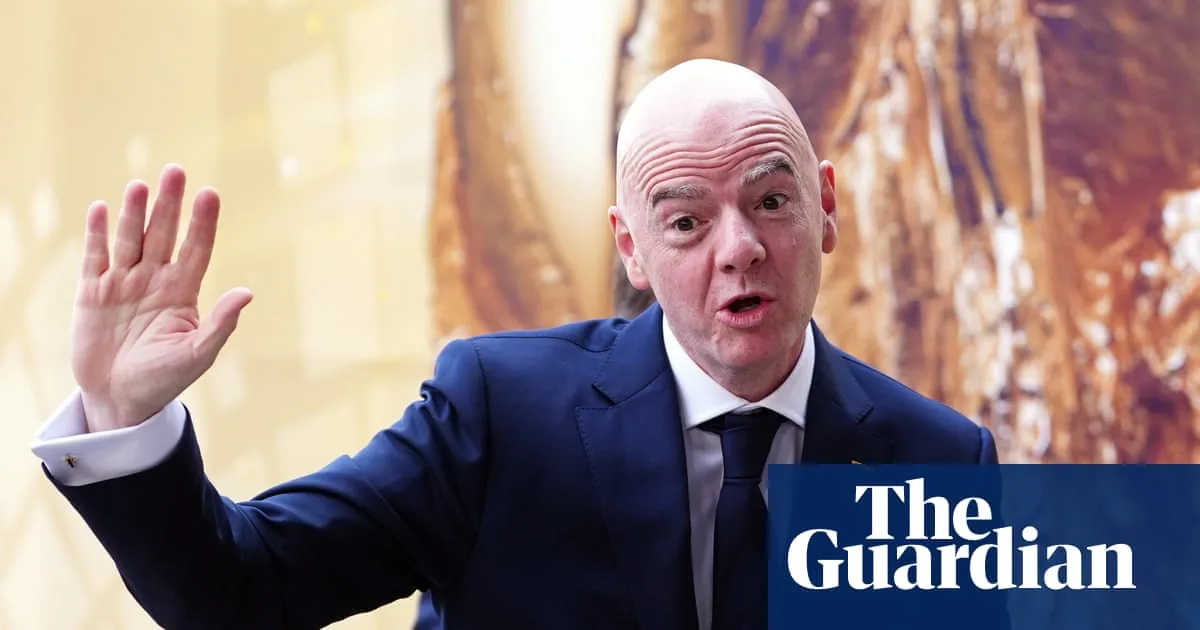

European opposition to Fifa’s commercial plans
Uefa has scheduled an emergency meeting for Thursday afternoon with its 55 member associations to discuss a coordinated response to Gianni Infantino‘s proposal to sell stakes in the World Cup to private investors. Among the options being considered is a potential European boycott of Fifa tournaments. Preliminary discussions have mentioned a boycott of next year’s Women’s World Cup, though some reluctance exists to impact the women’s game, as the proposals primarily focus on monetising the men’s World Cup and Club World Cup.
Uefa has strongly condemned Fifa’s plan, describing it as an attempt to “sell the soul” of football. This stance has garnered significant support from Concacaf, the North Central American and Caribbean confederation, and the Asian Football Confederation (AFC). If members of these confederations follow their leadership, there could be enough votes to block the proposal.
The three confederations combined represent 143 of the 211 Fifa members. However, unanimity is not guaranteed, as demonstrated by Czechia becoming the first European association to back the plan. Fifa president Gianni Infantino, having received over 200 letters of endorsement for his re-election next year, reportedly believes he has sufficient votes, though it is unclear if the proposal requires a simple majority to pass.
Sources suggest that establishing a new commercial entity, Fifa Forward Enterprise, and selling a 20% stake to investors would necessitate a change in Fifa statutes. Such a change would require a 75% majority, which would be more challenging to secure.
Concerns over transparency and governance
Uefa has intensified its criticism of Fifa, accusing the global governing body of “using our sport to enrich themselves and their friends.” This follows the revelation that Infantino presented members with a 19 September deadline to decide on applying for an initial payment of $20m (£15m) from the proposed sell-off. A further $20m would be available later for each association, though it is uncertain if accepting this money would constitute a formal endorsement, potentially bypassing a vote.
Uefa stated, “Today we have learned of Fifa’s deadline to associations to support their proposals or have the one-off payout offer withdrawn. This says everything you need to know about this plan.” The organisation added that discussions with various stakeholders indicate significant and growing opposition to Fifa’s scheme. Uefa emphasised the need to prioritise associations, clubs, leagues, players, and fans, stating, “Fifa cannot continue to use our sport to enrich themselves and their friends. We can grow the game correctly.”
Concacaf also issued a strong intervention, which is considered particularly noteworthy given its role in delivering a lucrative World Cup and its region being the source of proposed investment from Thrive Eternal, based in New York. Victor Montagliani, the Concacaf president, was instrumental in the successful joint bid by the US, Mexico, and Canada for the tournament. However, he and other Fifa vice-presidents and council members were reportedly unaware of Fifa’s plans.
Concacaf expressed deep concern over the lack of due process, stating it was only informed of the matter through media reports and a subsequent media release. The confederation voiced disappointment that such detailed plans were made public before discussions with relevant governance bodies and stakeholders. Concacaf stressed the responsibility of Fifa, confederations, and member associations to act in the sport’s best interests, guided by good governance, robust processes, and long-term stewardship.
The AFC released a similar statement of disapproval, which is understood to have the backing of the Saudi Arabian football federation, a close ally of Infantino and host of the 2034 World Cup. The AFC noted it was not consulted on the proposal and was disappointed that the matter became public before its family had the chance to examine and discuss it through established governance channels. While acknowledging the importance of innovative approaches, the AFC insisted that initiatives of this scale require comprehensive prior engagement with confederations, member associations, and other stakeholders.
Elite clubs have also voiced dissatisfaction. The European Football Clubs organisation highlighted that Fifa had not consulted it, despite a memorandum of understanding between the two bodies. The organisation, representing over 850 football clubs, stated it would be appropriate to be fully consulted on a proposal of such magnitude, as its member clubs, players, and communities are fundamental participants in football worldwide, including Fifa’s competitions.
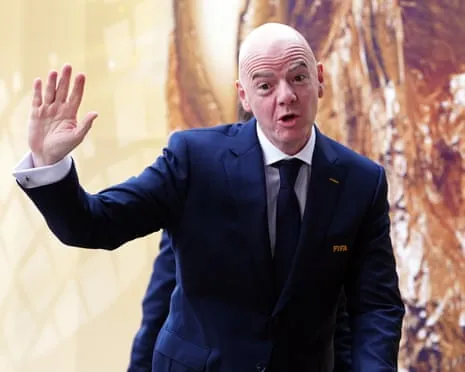
Infantino’s strategy and potential outcomes
Gianni Infantino has presented his plan as the democratisation of football, aiming to sell stakes in Fifa competitions, including the World Cup, to private investors. This move has been met with incredulity and anger from various stakeholders, including fans, politicians, and regional governing bodies. Infantino’s main selling point is the promise of $40m (£30m) in funding for all Fifa countries to “develop the game” once the deal is finalised.
Infantino has set a deadline of 19 September for football federations to accept his plans to access an initial $20m (£15m). This is considered a bold move by Infantino, who has been Fifa president for a decade. If the plan proceeds, it could consolidate his power for the long term and benefit investors.
Infantino’s ability to push through such a controversial plan stems from significant support from many countries in Africa, Asia, and the Americas. These nations have financially benefited from policies he has implemented, such as the expansion of the World Cup to 48 teams, increased commercial and broadcast revenue, and an annual programme allocating millions in funding directly to member countries. This support base accounts for over half of Fifa’s 211 members, and Fifa votes typically require a simple majority.
The proposal is particularly appealing to smaller football nations, for whom a £15m windfall could exceed their ordinary earnings over several years. Infantino’s close relationship with Donald Trump is also noted as a key factor. The investment fund Fifa is reportedly dealing with, Thrive Capital, is led by Josh Kushner, Trump’s brother-in-law. Additionally, Greg Maffei, former president of Formula 1 owner Liberty Media and a donor to Trump’s political campaigns, is acting as a “key commercial advisor.”
This follows years of Infantino cultivating ties with Trump, including awarding him a Peace Prize, opening a Fifa office in Trump Tower, and allowing the Club World Cup trophy to be kept in the Oval Office. Infantino recently mimicked Trump’s language in a statement describing critics of World Cup organisation as “so consumed by hate and criticism.” Working with Trump associates on this plan allows Infantino to leverage his bond with Trump for a potentially mutually beneficial outcome.
If approved, Fifa would receive a substantial influx of cash, with the portion for national federations available from 1 January 2027. Infantino stated in a letter to each country that the decision rests with them, requiring only their trust in exchange. However, each World Cup typically generates more revenue than the last, suggesting future growth. If Fifa sells stakes now, private investors would share in this future growth, rather than Fifa and football alone. As a non-profit organisation under Swiss law, Fifa’s theoretical goal is the long-term well-being of football, not profit.
Potential beneficiaries of the plan could be smaller football nations, private investors, and Infantino. Miguel Maduro, a former chairman of Fifa’s governance committee, raised doubts about whether the money would reach all levels of football as promised, citing past corruption cases and describing Fifa’s operations as a “political cartel” supported by patronage. Maduro, who resigned after 10 months, believes the proposal is likely to be approved, calling it a “form of legalised bribe.”
Private equity investment has already transformed sports in the USA, with rules changing in baseball, basketball, American football, and ice hockey to allow more minority investments, leading to increased team values. La Liga and Ligue 1 have also sold portions of their operations to private equity firm CVC Capital Partners for immediate funding. Infantino’s proposal aligns with this trend in sports economics. The conflict between Infantino and Uefa President Aleksander Ceferin has deepened, with Ceferin boycotting the World Cup final in protest against Fifa’s decision to overturn USA striker Folarin Balogun’s suspension after Trump’s intervention. This follows Uefa’s opposition to Fifa policies on issues like dynamic ticket pricing and hydration breaks. A key point of contention is Fifa’s revamped and expanded Club World Cup, which poses a direct challenge to Uefa’s Champions League.
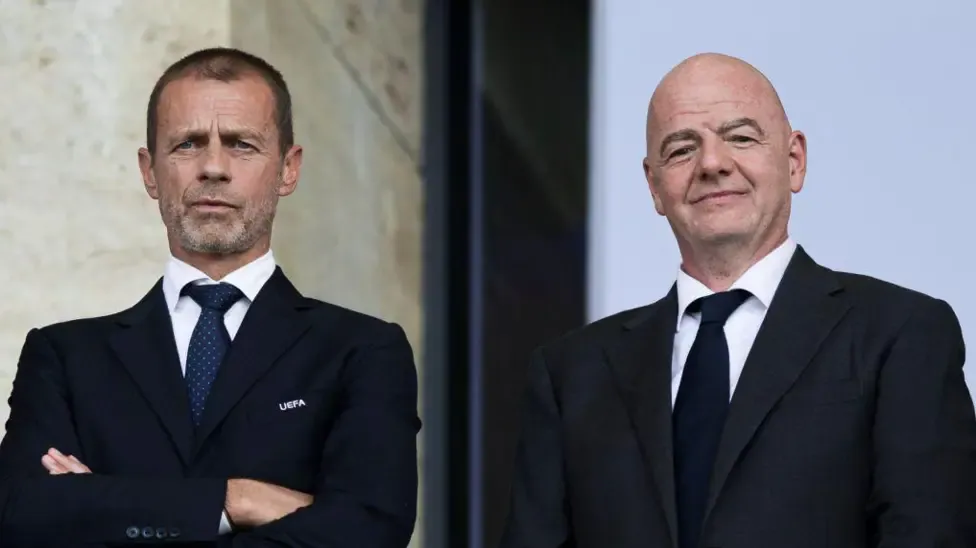
Previously, Uefa was the sole organiser of an international club football competition featuring top players, generating significant profits. Last summer, Fifa entered this elite club football territory by adding teams from other continents. While some national federations are reportedly angry about discovering the plans through public announcements, many statements have not explicitly condemned the concept of the sell-off itself. Many Uefa members are reportedly angry about the plan, and a meeting is set to discuss their response.
Source: theguardian.com

As News-GB.org's Sports Reporter, Eleanor Vance reports on tennis, cricket and athletics for readers across the country. She built her name on long-form athlete profiles. She holds a degree in Sport and Media from the University of Bath and completed an NCTJ diploma. Eleanor lives in Bath, where she swims competitively and follows British athletics. “A profile is only as good as the questions behind it.”