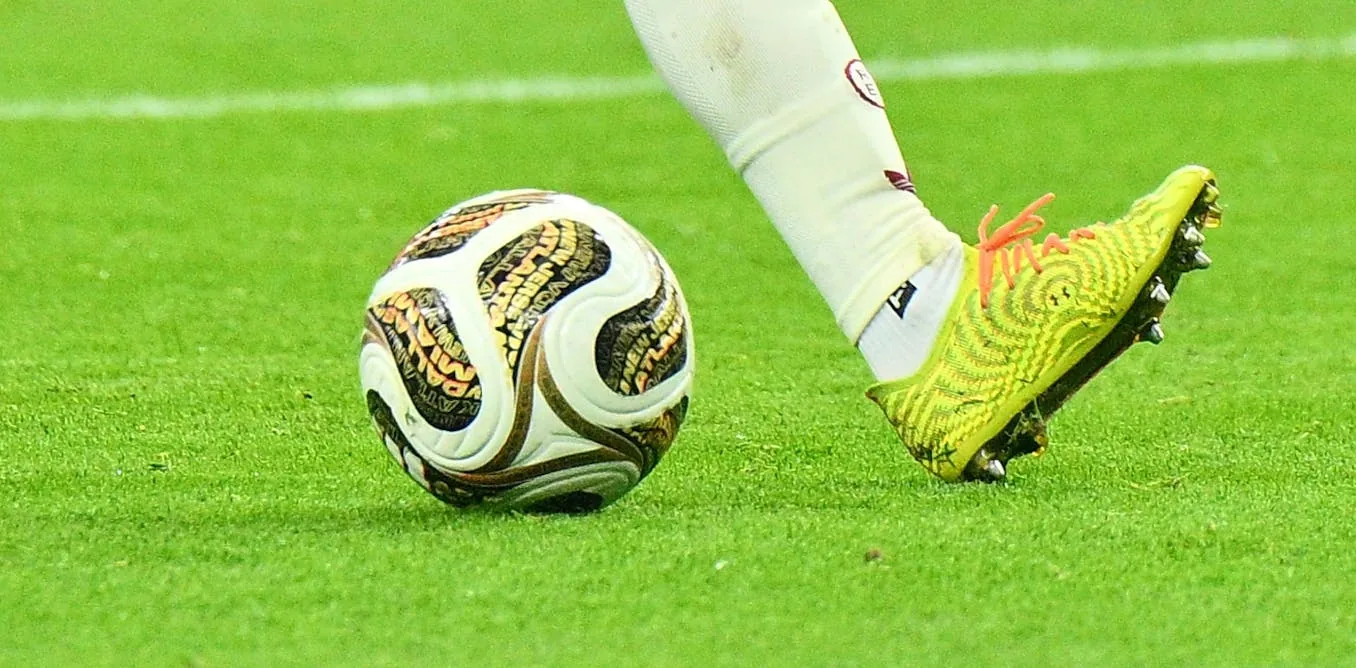

Mikel Merino, the Spain international, has spoken about his approach to football, emphasising the importance of being a good person alongside his athletic pursuits. His comments come as Spain prepares for the World Cup final against Argentina in New Jersey’s MetLife Stadium.
Merino reflected on a significant year, describing it as “spectacular” despite facing challenges, including an injury that threatened his participation in the World Cup. He noted that he would have accepted the difficult moments to experience a year that included a Premier League title, a Champions League final, the birth of his child, and a World Cup final appearance.
The 30-year-old midfielder admitted that a stress fracture in his foot initially made him doubt his chances of making it to the World Cup. He underwent surgery at the end of January, which provided clarity, and spent two months on crutches before beginning his recovery. He played just 28 minutes between January and the World Cup, leaving his newborn son, Marco, to join the squad.
Overcoming Injury and Impact from the Bench
Merino highlighted the support from his wife during his recovery, acknowledging her strength while she was pregnant. He also discovered his own resilience during this period. Despite the challenges, he views his presence at the tournament as a personal victory.
His contributions from the bench have been notable. At Euro 2024, he scored a 119th-minute goal against Germany in Stuttgart, securing Spain’s place in the semi-finals. In the current World Cup, he scored a 91st-minute goal against Portugal, which advanced Spain to the quarter-finals. Four days later, in Los Angeles, he scored the winning goal against Belgium after coming on in the 85th minute, with the goal coming at 87 minutes and 27 seconds. He achieved this with just two touches.
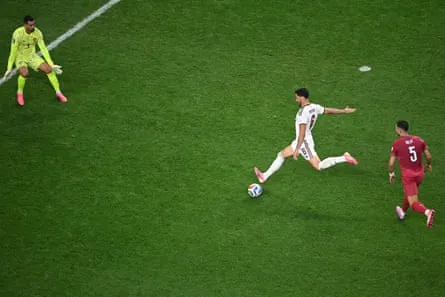
His goal celebrations, circling the corner flag, are a tribute to his father, Ángel Miguel, who performed a similar celebration for Osasuna 33 years prior in the same Stuttgart stadium. Merino expressed pride in following his father’s footsteps and learning from him.
While acknowledging that starting is ideal for any player, Merino values every opportunity when playing for a national team as strong as Spain. He focuses on the present and believes in his ability to make an impact, hoping that any Spanish player can be the hero in the final, as the trophy belongs to the entire team.
Team Cohesion and Tactical Approach
Merino believes that ego is important for a footballer, especially with external criticism, but it must be balanced with humility. He credits coach Luis de la Fuente for assembling a squad that prioritises being good humans first, which fosters a strong group dynamic. This approach helps the team spend extended periods together, understanding when to joke and when to be serious.
The team’s strong bond is evident in their off-field activities, with some players engaging in games like PlayStation, Mario Kart, or chess. Merino prefers “sobremesa” – long conversations after meals, discussing life, family, and future plans. He noted that some teammates are even planning to travel together after the World Cup, which he finds impressive given the time they have already spent together.

This collective strength has deep roots, built on respect and a long history. De la Fuente has coached many of the current squad members, including Merino and Rodri, since their junior levels, such as the European Under-19s in 2015. This long-standing relationship means the coach knows each player well, and the players have experienced both good and bad moments with him, fostering mutual trust.
Despite an initial loss to Scotland at the start of De la Fuente’s tenure, the team maintained belief. Since then, Spain has lost only once in 37 games, which was on penalties in the Nations League final. They have since won a Nations League and a Euros, and are now in the World Cup final.
In their 2-0 World Cup semi-final victory over France, Spain demonstrated a tactical approach involving passing triangles. This strategy created choices for Spain and uncertainty for their opponents, forcing French defenders to commit to specific actions. The constant movement and reconfiguration of these triangles allowed Spain to control the timing and location of new spaces on the field.
An example of this was Pedro Porro’s 58th-minute semi-final goal, where an exchange of passes with Dani Olmo shifted defenders’ focus, and Porro’s subsequent movement created a new angle for the return pass. This geometric approach, which has also been used in basketball, allows for alternatives, ensuring that if one route is closed, another remains open. Argentina will likely be studying these tactics ahead of the final.
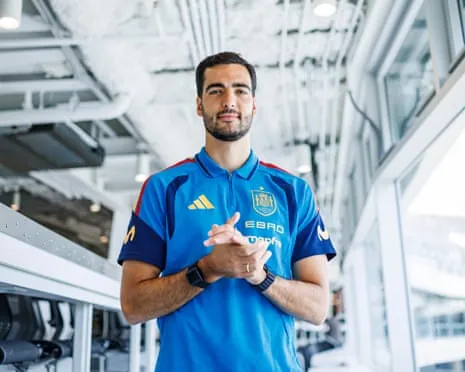
The World Cup final will be held on Sunday in New Jersey.
Read Also
- England coach Tuchel delivers message to players after World Cup semi-final defeat
- Aston Villa sign Johan Manzambi from Freiburg in club-record deal
- Miami: England coach Thomas Tuchel defends semi-final tactics in Argentina loss
- US President questions Harry Kane's defensive role for England after World Cup semi-final exit
Source: theguardian.com

Sam Whitlock is a Sports News Writer at News-GB.org. He moved from local newspapers into digital sport. He focuses on rugby union, golf and boxing and is known for clear, deadline-driven reporting. He holds a degree in Journalism from the University of Gloucestershire and completed an NCTJ diploma. Now based in Gloucester, he plays amateur rugby and follows the fight game. “Clarity beats cleverness in breaking sport news.”