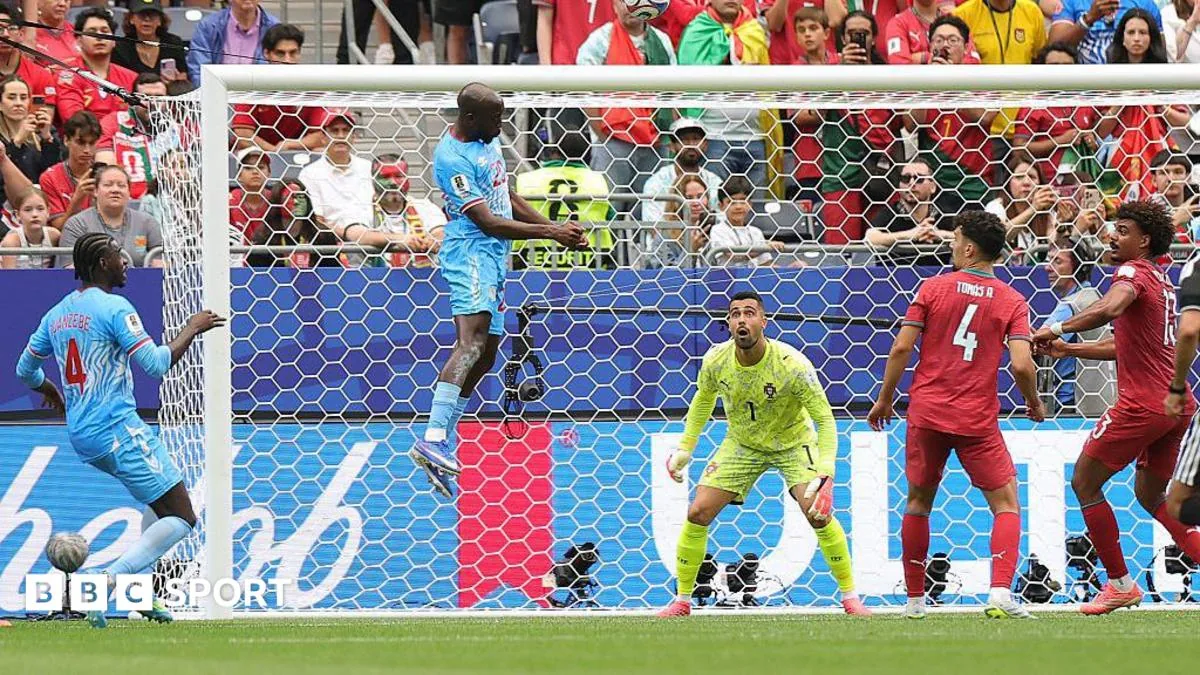

England are set to face DR Congo in the World Cup round of 32 today, Wednesday, July 1, 2026, at the Mercedes-Benz Stadium in Atlanta, Georgia. The match, kicking off at 17:00 BST, will be broadcast live on BBC One and iPlayer. England progressed to this stage after finishing first in their group, securing wins against Croatia and Panama, and drawing with Ghana. DR Congo advanced after finishing third in their group, with a win over Uzbekistan, a draw against Portugal, and a loss to Colombia.
DR Congo has consistently employed a 5-3-2 formation throughout the tournament, both with and without possession. Their average possession stands at 38.8%, significantly lower than England’s 65.7%, which is second only to Spain‘s 70.3%. This suggests a defence-first approach, aiming to launch counter-attacks. Despite their lower possession, DR Congo displays a surprisingly proactive defensive style, often pressing high from goal-kick situations against possession-dominant teams like Portugal and Colombia.
DR Congo’s Tactical Approach
DR Congo’s defensive strategy involves holding a higher line than might be expected from a team with their possession statistics, rather than consistently dropping deep into their own box. Their players tend to apply pressure to the player on the ball and surrounding teammates. From goal-kicks, their two strikers and three midfielders take advanced positions to press the opposition’s goalkeeper, centre-backs, and holding midfielder. The wing-backs are tasked with pressing the full-backs, leaving the three centre-backs to defend against three attackers. This man-to-man pressing approach could be an area England aims to exploit.
While this pressure could potentially lead to England errors, Thomas Tuchel‘s squad is accustomed to high presses from their club level in the Premier League. England may find opportunities by utilising wide full-backs in deeper areas of the pitch. By playing low, DR Congo’s marking wing-backs would need to cover larger distances, potentially creating more time and space for England’s full-backs on the ball. Tuchel has referred to this strategy as using “wide units”—comprising full-back, midfielder, and winger—to rotate and draw DR Congo players out of position, targeting this potential weakness.
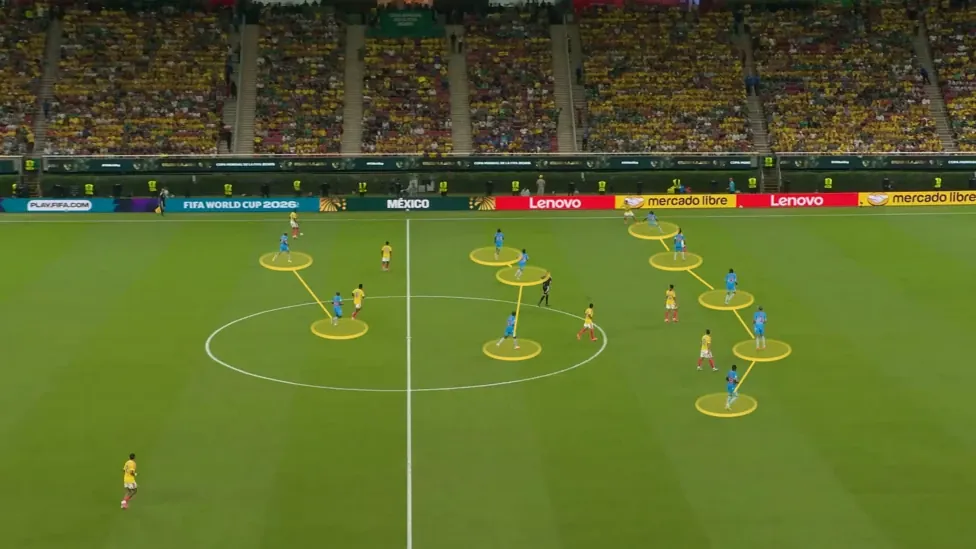
Another tactical element Tuchel has incorporated is building the squad to invite pressure before accelerating through the middle third, a concept highlighted by England assistant coach Anthony Barry. This strategy aims to draw the opponent’s attack and midfield away from the defensive line, creating more space and fewer defenders between England’s attackers and the goal. This explains the use of direct passes from deep by players like Elliot Anderson and Harry Kane to powerful runners in behind, and why England appeared more effective against a pressing Croatia side compared to a more passive Ghana.
DR Congo’s front two in their defensive block often press the centre-backs on the ball while screening passes to the defensive midfielder. However, if teams build with more than two players in the first line, their attackers can be outnumbered. This often necessitates a central midfielder pushing up to apply pressure, a situation England could leverage. Players like Nico O’Reilly, Jude Bellingham, or Declan Rice could pin the central midfielder infield, opening up unmarked passing lanes out wide. A third central defender, such as Jarell Quansah, could trigger DR Congo’s wide midfielder to press, allowing England to combine and move the ball into the vacated space.
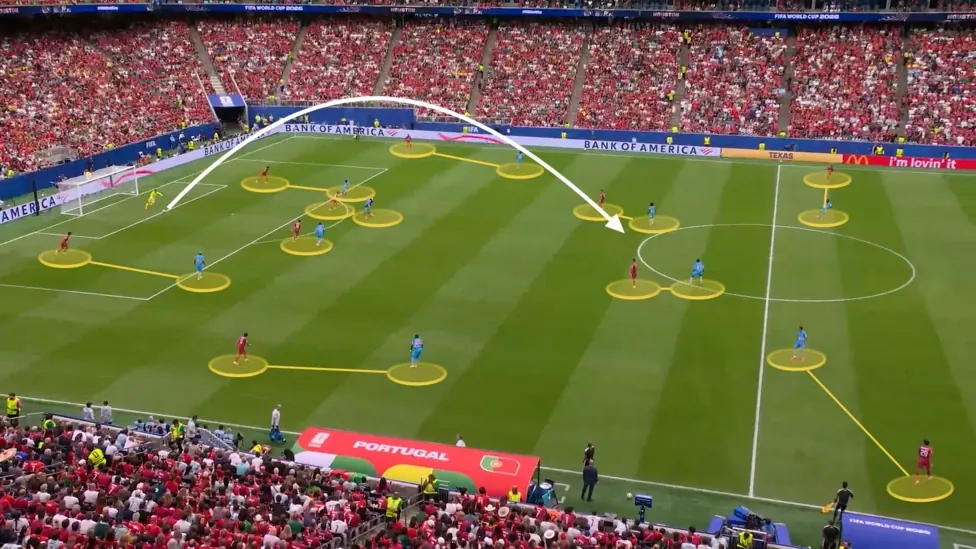
Against Panama, England showed a greater focus on passing through the centre of the pitch, and it remains to be seen if this pattern will continue. During the match against Ghana’s 4-5-1 low block, Tuchel was heard instructing his players to play “short, short, short” followed by “a long switch,” aiming for wingers to receive the ball unmarked in space. This tactic is likely to be seen again against DR Congo.
With only three central midfielders, overloading one side of the pitch with short passes to draw DR Congo players closer to the ball could create a gap on the far side. A long pass to this area could allow an England winger time to run at and beat the wing-backs. DR Congo’s limited width in midfield can also be exploited through simple horizontal passes from one side of the pitch to the other. While this carries a risk, Spain successfully used a similar approach against Saudi Arabia in the group stage.
A safer way to target this weakness is through throw-ins. DR Congo has committed many players to the area around throw-ins in the opposition’s half during this World Cup. Opponents have found it easy to locate an unmarked player from a throw. Given DR Congo’s relative lack of width, a first-time pass back to the thrower before switching play could quickly put England in a strong attacking position.
DR Congo’s Attacking Threat
Despite their defensive focus, DR Congo possesses its own attacking threats. From goal-kicks, they often build up with short passes in an unconventional manner. Their back three spreads wide, effectively forming a back four when the goalkeeper is involved. The wing-backs take wide positions, and a holding midfielder sits in front. The positions of the remaining two midfielders and two forwards are less rigid; they tend to crowd around where longer passes are aimed rather than staying in predetermined zones, which can help them gain control of loose balls more reliably.
This widely spaced build-up makes DR Congo’s passing riskier. While Portugal found some success in dispossessing DR Congo’s midfielders by applying pressure, this style of build-up also makes it challenging for opponents to press cohesively due to the large distances they must cover as a unit. Additionally, Yoane Wissa is considered their most dangerous player, with his ability to anticipate attacking situations and react quickly in the box posing a significant threat.
England scored two second-half goals against Panama through Jude Bellingham and Harry Kane.
Read Also
Source: bbc.com

Sam Whitlock is a Sports News Writer at News-GB.org. He moved from local newspapers into digital sport. He focuses on rugby union, golf and boxing and is known for clear, deadline-driven reporting. He holds a degree in Journalism from the University of Gloucestershire and completed an NCTJ diploma. Now based in Gloucester, he plays amateur rugby and follows the fight game. “Clarity beats cleverness in breaking sport news.”